Small Living Room Furniture: How to Plan a Layout That Actually Works
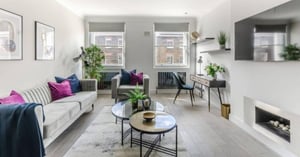
You walk into a living room that measures barely four metres across and you already know the sofa you fell for in the showroom simply won't fit. That moment is where most people's real questions about small living room furniture begin: it isn't about squeezing in as many pieces as possible, it's about making the whole room work in your favour rather than against you. A well-planned layout in a compact space can change how the room feels far more than a full renovation ever would.
Start With How You Actually Use the Room
Before you open a single catalogue, answer one question honestly: what actually happens in this room on a typical Tuesday evening. Do you watch television there, work from a laptop, host friends, or all three in the same hour. Functional zones in a small living room don't need a stud wall or a bookcase to separate them: a different armchair angle or a repositioned side table often does the job. Many people plan a layout starting with the biggest item, the sofa, instead of starting with how they actually move through the room. It's worth reversing that order: map the paths you walk most often first, then fit the rest of the furniture around them.
A simple trick helps here too. Before buying anything, mark out the approximate footprint of a piece on the floor with tape and check whether you can still move around it comfortably. It takes ten minutes and saves you from a sofa that looks perfect in the shop but blocks the route to the window at home.
Small Living Room Furniture: Scale and Proportion Matter More Than Square Metres
The biggest mistake in a compact room usually isn't an oversized sofa, it's a set of pieces whose proportions don't relate to each other. A tall chest of drawers next to a low coffee table and a bulky armchair creates visual clutter even when each piece looks good on its own. The answer is consistent scale: if your sofa has a low back line, choose a coffee table and shelving unit of a similar height so the eye can travel across the room instead of stopping at each obstacle. Legs matter too: furniture standing on slim, exposed legs visually lifts off the floor and leaves more breathing room for the eye, which counts for a lot in a small living room.
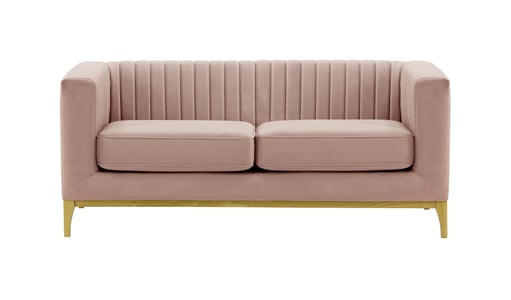
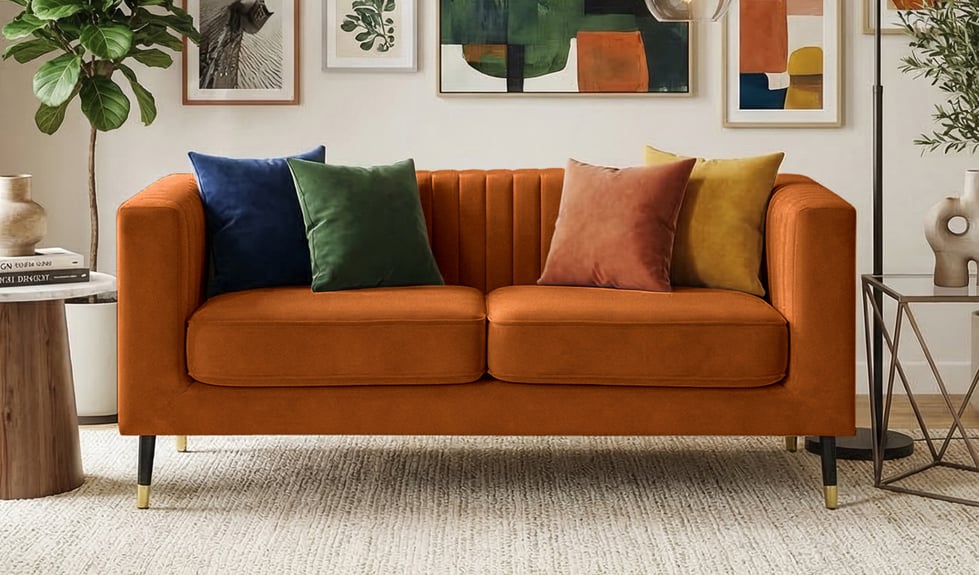
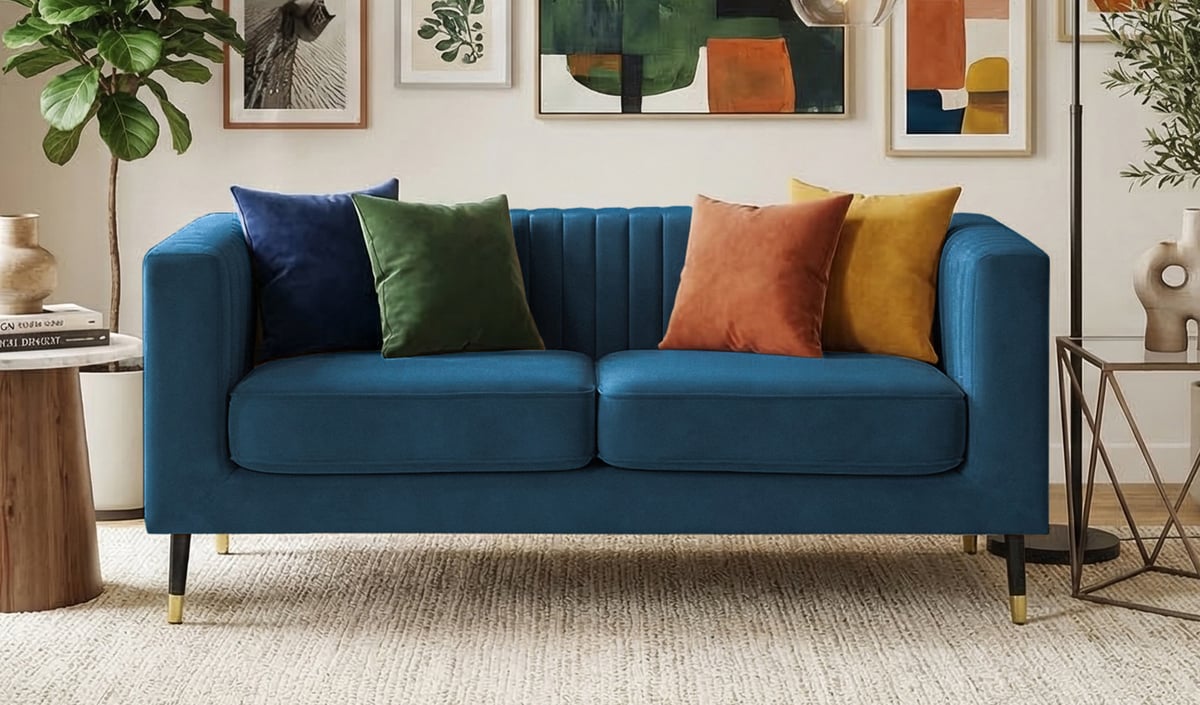
If you're after a compact sofa that won't dominate a small living room while still delivering proper comfort, the Slender 2 Seater Sofa is available in Matt Velour, a matte velvet with a short, dense pile and a soft, non-glossy surface that keeps its good looks under daily use, which makes it a natural fit for a room where every visual line needs to stay calm. Slender 2 Seater Sofa →
The Sofa as the Anchor: Why Compact Models Win
The sofa usually takes up more floor space than any other single item, so it decides more than anything else whether a room breathes or feels crowded. In small spaces, a compact two-seater sofa tends to outperform a large corner unit even when the corner unit would technically fit. A compact footprint leaves a margin around the piece, so you can walk the room freely rather than squeezing between the armrest and the wall. Seat depth deserves attention too: anything deeper than about ninety centimetres is lovely for lounging but can eat into the centimetres you'd rather spend on a walkway or a slim shelving unit.
Multi-Purpose Pieces: Furniture That Does More Than One Job
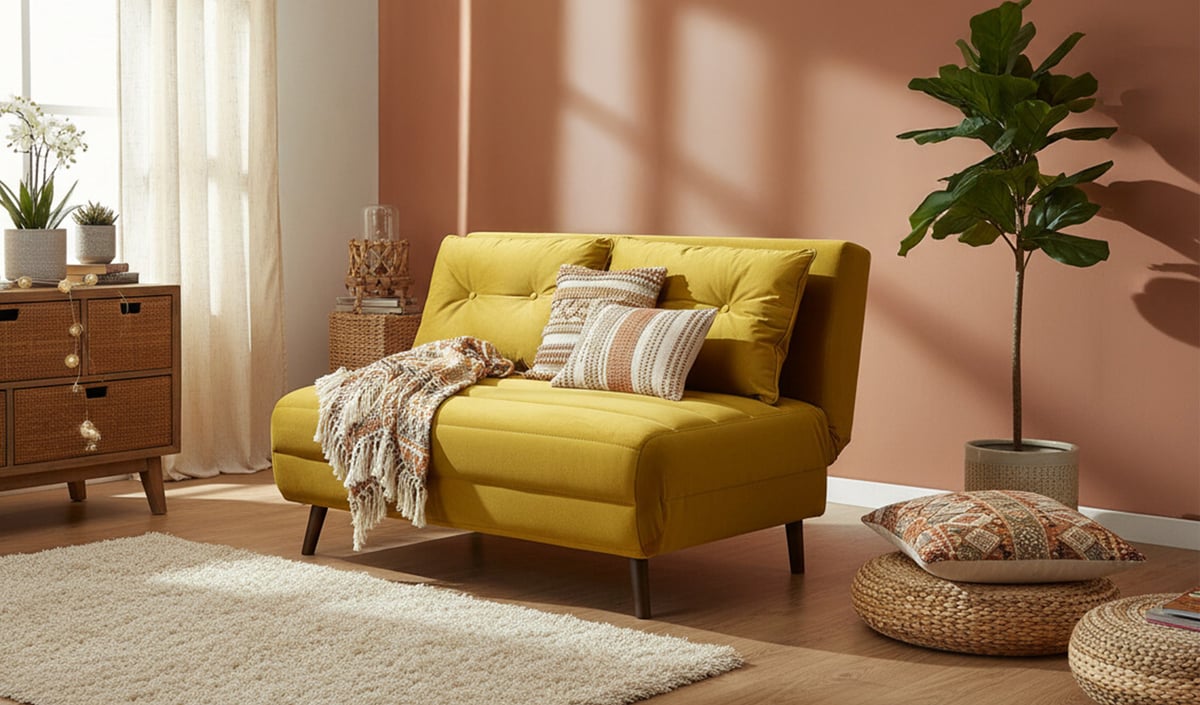
The most effective small living room furniture earns its place twice over. A coffee table with a lidded storage compartment becomes the home for throws and remote controls, a footstool with a lift-off lid hides magazines, and a sofa bed turns the same room into a guest room within seconds. None of this is a compromise, it's smart use of floor area: instead of buying another piece for another need, you choose one that quietly covers several.
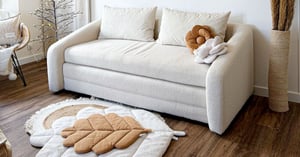
When your small living room also needs to double as a guest room, it's worth choosing a piece that makes that switch without any fuss: the Flic Small Sofa Bed, width 103 cm, is available in Baku, a felt-structured fabric with a soft, wool-like feel that resists scratches from pets and holds its appearance over time, which suits a piece that has to earn its keep in a heavily used, space-conscious room. Flic Small Sofa Bed →
.jpg)
Light, Colour and Flooring: The Finishing Touches for Small Living Room Furniture
Even a carefully planned layout can feel heavy if the colour palette works against the room rather than with it. Light, calm upholstery tones visually push furniture away from the walls, while very dark colours, elegant as they are, can shrink a room's apparent size unless they're balanced with enough light. A rug placed under the sofa's front legs, rather than just in front of it, visually unifies the seating area and makes the room feel larger than its floor plan suggests. A floor lamp in the corner the ceiling light doesn't reach often does more for a sense of space than yet another round of furniture rearranging.
Planning small living room furniture is, in practice, a series of small, deliberate decisions rather than one clever trick. Start with how you genuinely use the room, match the scale of your pieces to one another, let a compact sofa anchor the space, and look for furniture that earns its keep twice over. Colour, light and a well-placed rug take care of the rest. The result is a living room that not only fits what you need, but is genuinely comfortable to live in every day.