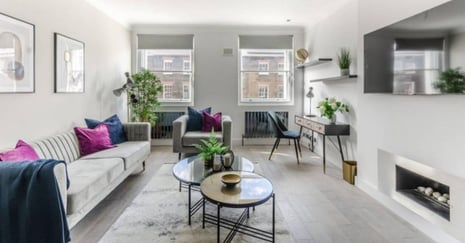
You walk into a living room that measures barely four metres across and you already know the sofa you fell for in the showroom simply won't fit. That moment is where most people's real questions about small living room furniture begin: it isn't about squeezing in as many pieces as possible, it's about making the whole room work in your favour rather than against you. A well-planned layout in a compact space can change how the room feels far more than a full renovation ever would.
Our Blog
An unique furniture journal
-
 Interior design ideas Living roomRead more
 -
 Living roomRead more
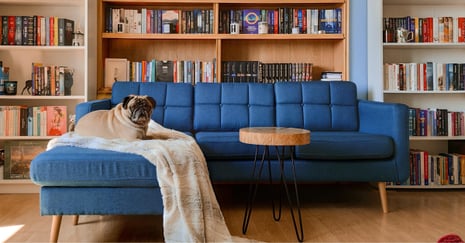
Anyone who shares a sofa with a dog or a cat knows the quiet negotiation that happens every single day: who gets the good spot, whose fur ends up in the seams, and whether that one corner will ever look the same again. A sofa in a pet household lives a different life than one in a house without animals, and the good news is that a few deliberate choices at the buying stage can turn that daily negotiation into something far more relaxed for everyone, four legs included. Here's what actually matters when you're choosing a sofa that will hold up to claws, fur, and the occasional muddy paw, without giving up on style.
-
 Interior design ideasRead more
There's a particular moment every year, somewhere around the first properly dark afternoon, when a living room that felt effortless all summer suddenly feels a little flat. The same sofa, the same cushions, the same light coming through the window, except the window is now dark by five and the room hasn't caught up. That gap between how a space feels and what the season actually calls for is exactly what good seasonal styling closes, and it has almost nothing to do with buying new furniture and everything to do with rethinking texture, color, and layout together.
-
 Interesting facts and tipsRead more
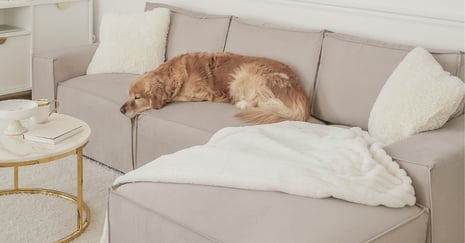
Most of us sit down on the sofa expecting to rest, and get up a few hours later with a vague tension in the back and a sense that something wasn't quite right - though it's hard to say what. Shifting position, searching for a more comfortable angle, instinctively reaching for a cushion to prop behind the lower back - these aren't bad habits. They're signals the body sends when the furniture isn't doing what it should.
-
 Interesting facts and tipsRead more
There's a certain kind of chaos that comes with a home full of little ones and animals — muddy paws, sticky fingers, the occasional mystery stain that appears from nowhere. Your sofa sits right in the middle of it all, and it tends to show every bit of it. The good news is that keeping it looking fresh doesn't require constant vigilance or furniture you're afraid to actually use. It requires the right choices upfront and a few simple habits along the way.
-
 Interesting facts and tipsRead more
Most people believe that recovery is simply about resting longer. Sit down, lie back, sleep more, and the body will fix itself. But the reality is more complex. The quality of your recovery is not defined by time alone. It is defined by how your body responds to the environment around it. At the center of this response is your nervous system. It constantly scans your surroundings, your posture, and even the pressure on your body. Based on these signals, it decides whether your body should stay alert or begin the process of recovery. This decision shapes how well you relax, how deeply you recover, and how you feel the next day.
-
 Interesting facts and tipsRead more
At the end of a long day, most people look forward to sitting down or lying back. It feels like rest, and in many ways it is. But what if your body is still under stress, even when you are not moving? The truth is that recovery depends not only on rest, but on how your body is supported during that rest. One of the most overlooked factors is pressure. The way pressure is distributed across your body can either support recovery or quietly prevent it from happening.
-
 Interesting facts and tipsRead more
Most people think relaxation is something you feel. You sit down, take a deep breath, and assume your body is resting. But true relaxation is not just a feeling. It is a biological state controlled by your nervous system. At the centre of this process is the parasympathetic system. This is the part of your body responsible for slowing things down, reducing stress, and allowing recovery to happen. When this system is active, your body shifts from doing to restoring. Without it, even long periods of rest may not lead to real recovery.
-
 Interior design ideasRead more
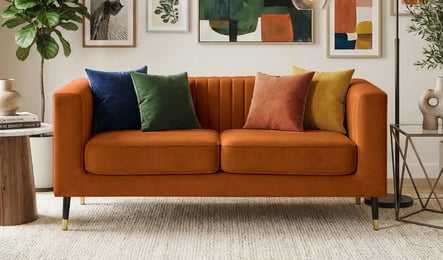
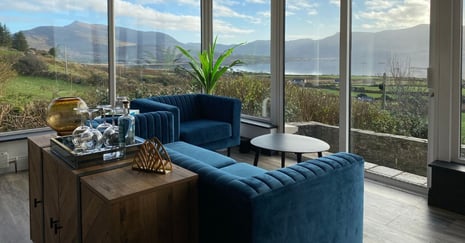
Not so long ago, the safe choice was simple - a grey sofa, a beige couch, a neutral base that "goes with everything". Today, more and more people are consciously reaching for colour, not as an aesthetic risk, but as a tool for shaping their wellbeing. Dopamine Décor, as this trend is known, is an approach to interiors that puts emotions first. The idea is for a home to not only look good in photos, but to genuinely feel good to live in - every day, at every hour. And the sofa, as the focal point of the living room, is absolutely key to achieving this.