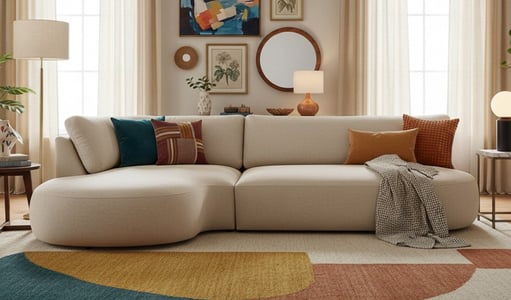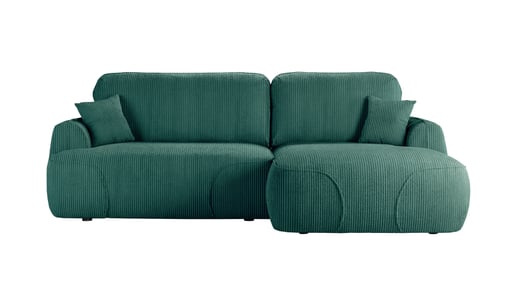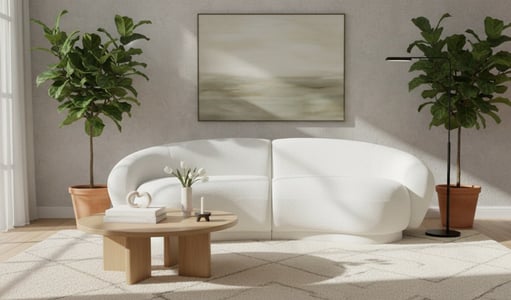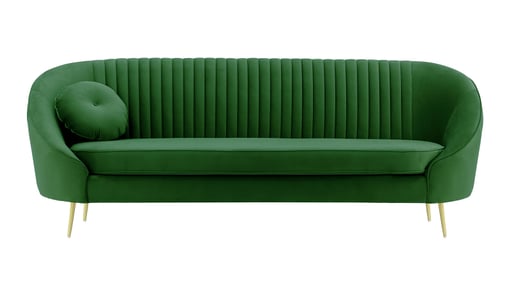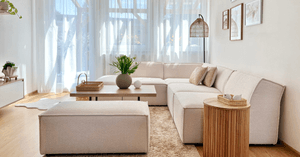
The Return of Curves: Sculptural Sofas That Redefine Relaxation.
Not long ago, interiors were dominated by geometric discipline, sharp angles, and straight lines intended to emphasise order and modernity. Today, however, there is a clear shift towards softer, flowing and more sensuous forms that respond to the need for rest not only of the body, but also of the eyes. Sculptural sofas defined by curves are not a fleeting trend, but the result of a deeper change in how we think about the home as a place of regeneration. Their presence influences how we move through a room, how we perceive proportions, and how the atmosphere of an interior is shaped. These are pieces of furniture that do more than provide seating; they build an emotional relationship with space. For this reason, curves are returning to living rooms in such a considered and refined way.
Curves as a Response to the Need for Softness
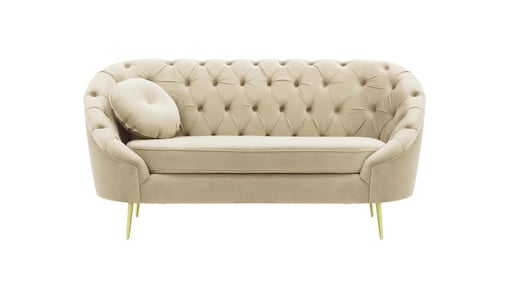
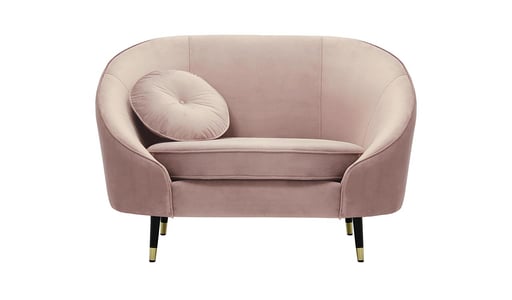
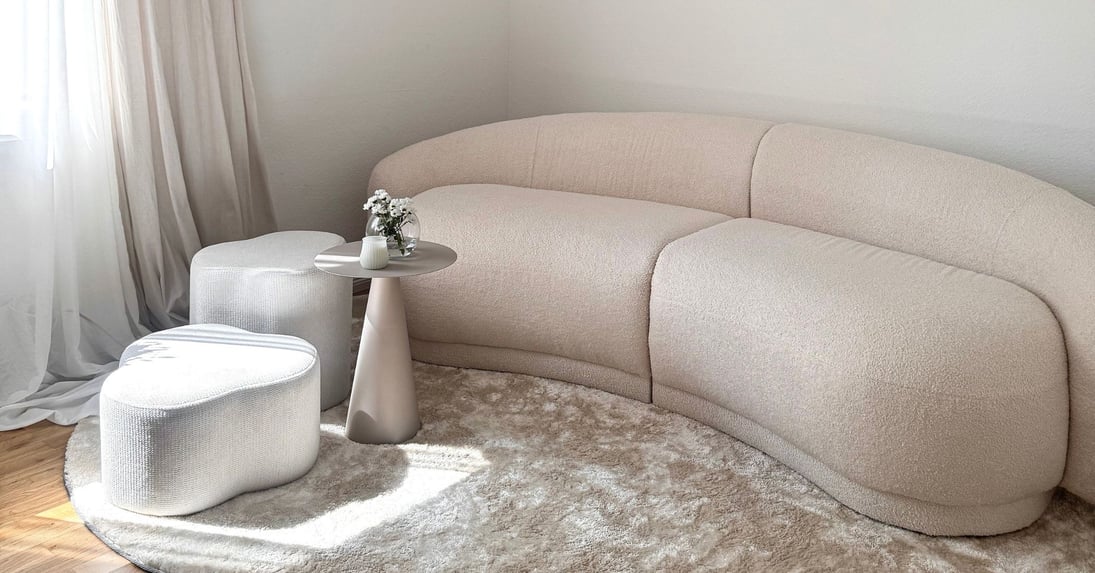
At first glance, a sculptural sofa with a curved line reveals its ability to soften a space, which ceases to be a collection of sharp boundaries and instead becomes a coherent, flowing whole. Rounded shapes have a calming effect on perception, as the brain instinctively interprets them as safer and more welcoming than broken lines. In practice, this means the sofa becomes the visual centre of the living room, around which a harmonious arrangement is easier to build. The gentle line of the backrest encourages longer periods of rest, as the body does not encounter the tension points typical of angular forms. As a result, comfort experienced in use goes hand in hand with an aesthetic that does not dominate, but invites. The curve therefore acts as a link between function and form, which is of fundamental importance in contemporary design.
A second dimension of softness emerges in the way such a sofa interacts with other elements of the interior, even when those elements are more minimalist in character. The rounded silhouette breaks the monotony of straight walls, tables, or shelving, introducing visual rhythm without the need for excessive decoration. Interior designers often use this contrast to give a space depth and a sense of movement. Crucially, curvature does not mean sacrificing ergonomics, as modern technologies make it possible to precisely adapt the shape to the natural line of the spine. As a result, comfort remains high even with bold styling choices. The sofa becomes an element that combines visual softness with a carefully considered form of construction.
The Sculptural Sofa as the Centrepiece of the Living Room
In arrangements built around curves, the sofa ceases to be a background element and instead takes on the role of a focal point around which the entire living space is organised. Its presence naturally defines circulation paths, guiding both the eye and movement in an intuitive way. This gives the living room a more organic character, conducive to relaxed gatherings and everyday unwinding. The sculptural form functions like an art object while remaining fully practical. It is precisely this balance that ensures comfort is not sacrificed for visual impact. The central form of the sofa organises the space without the need for additional divisions.
In practice, this also means greater flexibility in arrangement, as such a sofa works equally well in open-plan spaces and in more intimate living rooms. Its curved shape allows it to be positioned in unconventional ways, for example slightly away from the wall, which enhances the sense of spaciousness. This solution is particularly valued in modern apartments where the living room connects with the dining area or kitchen. As a result, comfort of use is combined with a feeling of lightness in the interior. The sculptural form does not close off the space, but instead structures it, giving it a clear and legible layout.
Ergonomics Hidden in a Soft Line
Although curves are primarily associated with aesthetics, their ergonomic significance is often underestimated. Rounded backrests and seats adapt more naturally to the body’s contours, reducing muscular tension during prolonged sitting. Designers increasingly collaborate with ergonomics specialists to combine sculptural silhouettes with precisely planned support for the back. The result is a piece of furniture that promotes regeneration rather than merely offering short-term rest. In this context, comfort is not an added benefit, but the foundation of the design. The soft form becomes a tool for improving the quality of everyday relaxation.
Ergonomics is also evident in the depth of the seat and the angle of the backrest, which in curved sofas tend to feel more natural than in rectangular models. This type of construction allows for a variety of sitting and reclining positions without a sense of rigidity. This is particularly important in living rooms that serve multiple functions, from social gatherings to quiet downtime. As a result, comfort remains consistent regardless of how the sofa is used. A well-considered form supports flexibility that responds to the real needs of household members.
Materials That Enhance the Flow of the Shape
Sculptural curved sofas require carefully selected materials that can highlight their flowing lines without compromising durability. Fabrics with a delicate weave or soft pile allow light to subtly play across the surface, enhancing the sense of depth. At the same time, the quality of foam and filling determines whether the sofa will retain its shape over years of use. High-quality materials ensure that comfort remains unchanged even with intensive everyday use. It is these elements that bring out the sculptural form without unnecessary ornamentation.
Colour choice also plays a key role, as neutral tones tend to showcase curves more effectively than bold patterns. Beiges, warm greys, and subtle pastels allow attention to remain on the line of the furniture rather than its surface. This makes the sofa more timeless and easier to combine with other interior elements. Properly selected materials enhance both visual and physical comfort. A coherent form remains legible regardless of shifting trends.
Curves and the Psychology of Space
From the perspective of interior psychology, rounded shapes foster a sense of safety and relaxation, as they are not associated with barriers or restrictions. A sofa with a flowing line invites rest because its shape does not impose a single, rigid posture. As a result, the living room becomes a more open environment for interaction and daily rituals. Such a piece influences the perception of the entire interior, even when other elements remain simple and restrained. In this context, psychological comfort aligns closely with physical ease. The rounded form has a calming effect on the senses.
Curves also support better communication within a space, as they make it easier to arrange seating in a way that encourages conversation. Instead of a linear layout that separates users, a semi-circular composition emerges, fostering contact. This is particularly important in living rooms that function as gathering places for family and friends. As a result, social comfort becomes just as important as ergonomics. The open form of the sofa supports natural relationships between people.
How to Integrate a Sculptural Sofa into Different Styles
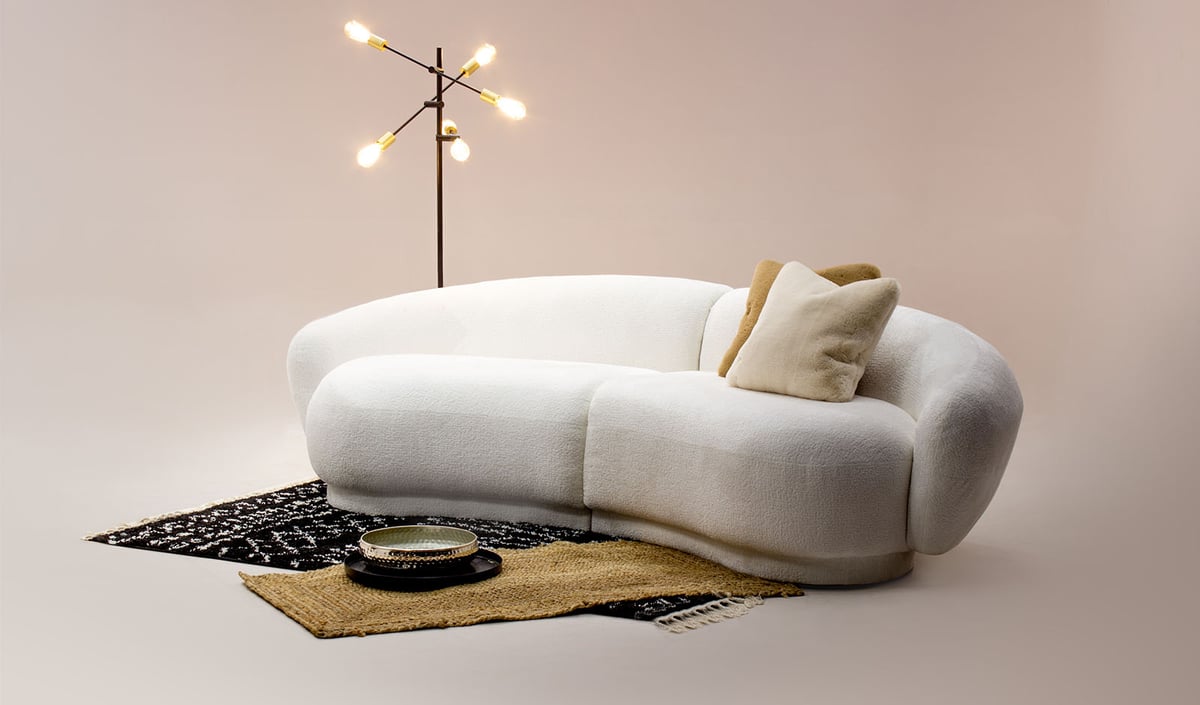
Although sculptural sofas are often associated with contemporary interiors, their design potential is far broader. In minimalist settings, they soften the space and break its austerity. In more classic arrangements, they can act as a modern accent that refreshes the interior without disrupting harmony. The key lies in carefully coordinating accessories and colours so they do not compete with the sofa’s silhouette. In this way, comfort of use aligns with visual coherence. The versatile form allows for easy adaptation to a wide range of interior concepts.
In practice, it is important to consider the scale of the sofa relative to the room, as an overly massive shape may overwhelm smaller spaces. Modular models or lighter constructions are better suited to compact interiors. In larger living rooms, however, one can afford a more expressive sculptural statement. Regardless of the choice, comfort should remain the priority. A well-chosen form enhances the character of the interior rather than dominating it.
A Conscious Choice for Years to Come
Choosing a sculptural curved sofa is best approached as a long-term investment rather than a seasonal addition. Construction quality, material durability, and ergonomics all have a direct impact on everyday use. The sofa should respond not only to current trends, but also to the lifestyle of its users. In this sense, comfort becomes the primary criterion that determines satisfaction with the purchase. A timeless form allows the piece to be enjoyed for many years.
A conscious choice also involves considering personalisation options, such as fabric selection or modular configurations. These features allow the sofa to better adapt to individual needs and evolving interior arrangements. It becomes a solution that grows with the home and its occupants. As a result, comfort does not lose relevance over time. A flexible form remains functional regardless of changes in the surrounding space.
Conclusion
The return of curves in sofa design is far from accidental, as it responds to real needs related to rest, aesthetics, and quality of everyday life. Sculptural sofas combine knowledge from ergonomics, spatial psychology, and contemporary design to create furniture that redefines the living room. Their presence changes the way we use interiors, making them softer, more open, and more conducive to relaxation. This is a choice for those who value conscious design and want furniture to have a tangible impact on daily comfort. Thanks to thoughtful construction and quality craftsmanship, such sofas remain relevant regardless of shifting trends. For this reason, curves are once again finding their place at the heart of the home.