Wabi-Sabi at Home: Imperfect Furniture, Perfect Atmosphere
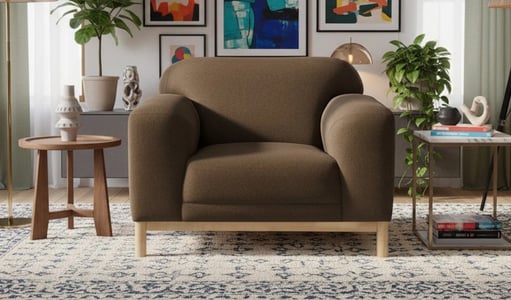
Wabi-Sabi is not a style in the conventional sense, but rather a philosophy of perceiving space, rooted in the acceptance of impermanence, authenticity and natural irregularity. Within the home, it represents a departure from sterile perfection in favour of material honesty, tactile surfaces and the subtle marks left by time. Beauty, in this context, does not rely on symmetry or polish, but on presence and depth. Applied to furniture, this translates into pieces with visible grain, organic lines and understated asymmetry. Wabi-Sabi introduces an aesthetic of imperfection that calms the senses and strengthens emotional attachment to objects. Instead of dominating a room, furniture becomes an extension of its atmosphere.
This philosophy also reshapes our understanding of ageing, because materials do not lose value over time, but rather gain character and resonance. Wood with pronounced knots, fabrics that soften with use, or ceramics with irregular glazing embody material authenticity rather than flaw. The interior ceases to be a staged composition and begins to function as a living environment that evolves alongside its inhabitants. Wabi-Sabi is therefore not about austerity, but about harmony between form and time. Every element belongs because it does not pretend to be something else. It is a subtle yet profound shift in design perspective.
Furniture That Carries a Story
In a Wabi-Sabi interior, furniture is more than functional equipment; it becomes a carrier of narrative shaped by daily life. Visible joinery, slightly uneven edges or hand-finished surfaces emphasise craftsmanship integrity and individuality. These nuances prevent the space from feeling catalogue-perfect and instead give it quiet personality. Unlike mass-produced items defined by uniformity, Wabi-Sabi embraces difference and subtle irregularity. It is precisely this variation that builds emotional warmth. A piece does not need strict symmetry to feel complete.
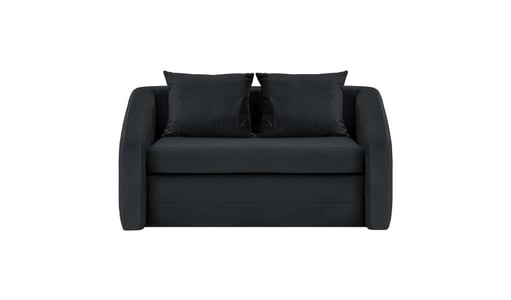
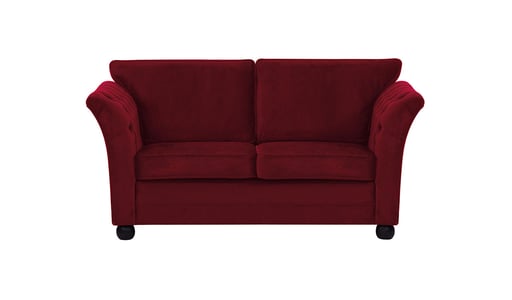
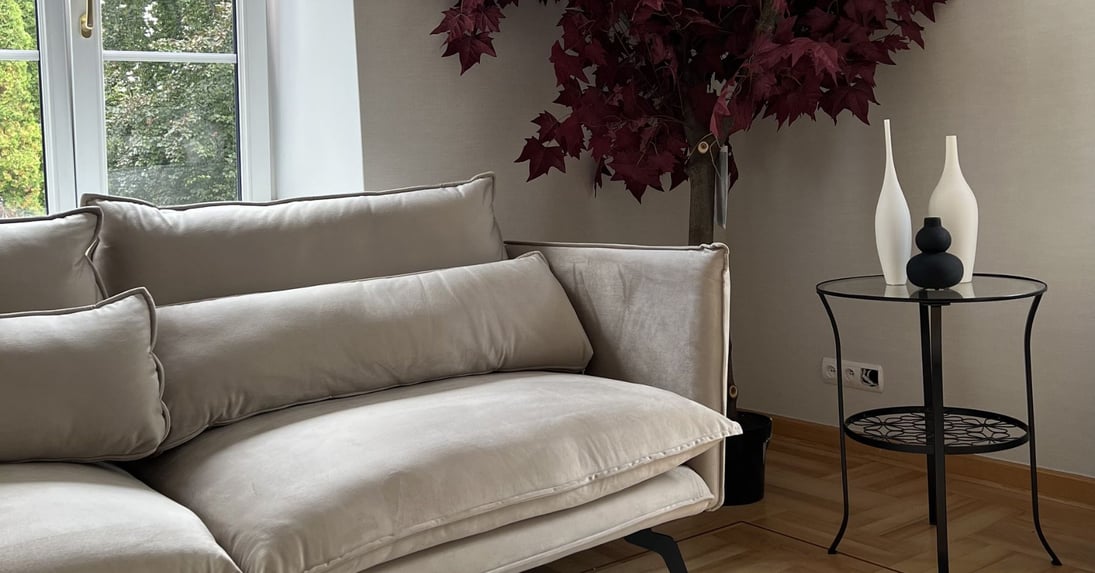
Check → Flic Small Sofa Bed - width 103 cm
Over time, such furniture gains depth, as signs of use are not considered damage but layers of lived experience. Wood may darken, textiles may relax, metal may develop a soft patina, reinforcing a sense of temporal continuity rather than deterioration. The home becomes a place that welcomes change instead of resisting it. This mindset encourages more conscious purchasing decisions, favouring longevity over seasonal novelty. Instead of replacing objects to match trends, we build relationships with them. Design becomes slower, yet more meaningful.
Natural Materials as the Foundation of Atmosphere
Wabi-Sabi interiors rely on materials that remain close to their natural origin and retain tactile honesty. Wood, linen, wool and stone introduce organic warmth that synthetic finishes rarely replicate. Their surfaces interact with light in irregular ways, creating subtle tonal transitions and visual softness. It is this quiet dynamism that shapes a sense of calm. Materials are not decorative layers, but active contributors to the spatial composition. The room begins to breathe rather than perform.
Equally important is the restrained colour palette, typically drawn from earth tones and muted neutrals. Soft greys, clay shades, warm off-whites and faded browns support sensory harmony, as they do not overstimulate the eye. This chromatic subtlety promotes concentration and rest, directly influencing everyday comfort. Furniture does not compete for attention, but collaborates within a cohesive narrative. The interior shifts from display to experience. Atmosphere becomes the primary design outcome.
Imperfection as a Form of Balance
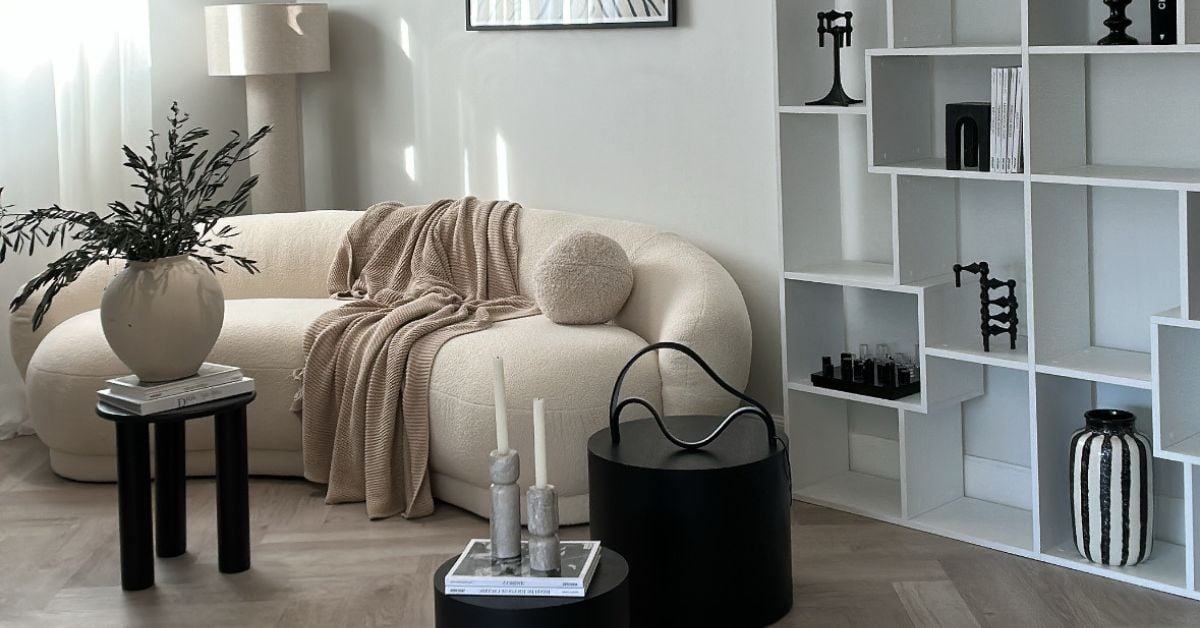
In Wabi-Sabi-inspired spaces, symmetry is not the ultimate goal, as nature itself rarely operates through rigid alignment. A slightly offset coffee table, an asymmetrical shelving composition or a gently irregular sofa silhouette introduce dynamic equilibrium that feels more authentic than geometric precision. Such arrangements allow the interior to feel alive and evolving. The absence of strict symmetry introduces a subtle movement that is visually engaging without being disruptive. This is an aesthetic guided by intuition rather than calculation.
At the same time, imperfection does not equate to disorder, because proportion and light remain carefully considered. The key lies in maintaining compositional coherence, even when elements differ in shape or finish. The room remains harmonious precisely because variation is intentional. Wabi-Sabi is not randomness, but distilled simplicity enriched by nuance. It demonstrates that restraint can coexist with depth. Balance arises not from uniformity, but from thoughtful contrast.
Atmosphere Over Perfection
The most significant outcome of introducing Wabi-Sabi into the home is not stylistic transformation, but emotional recalibration. The interior becomes softer in character, because it no longer imposes rigid standards of flawlessness. Furniture with natural textures and gentle irregularities fosters an atmosphere of calm, supporting rest and psychological ease. The home ceases to function as a display space and instead becomes a lived environment. Every object contributes to a sense of authenticity.
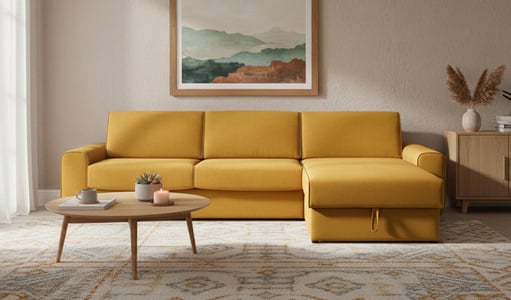
Check → Ace Minimalist Right Hand Corner Sofa with Rounded Form
In practical terms, this approach also allows greater freedom in arrangement, as minor variations enrich rather than disrupt the whole. Instead of pursuing perfect alignment, attention shifts toward emotional comfort and spatial resonance. This philosophy encourages conscious design decisions grounded in durability and meaning. Wabi-Sabi offers no rigid formula, but invites reflection on what makes a space genuinely nurturing. It is not about less effort, but about deeper intention.
Conclusion
Wabi-Sabi at home is not a passing trend, but a way of thinking about space and the objects within it. Imperfect furniture does not diminish quality; it enhances depth and character. By embracing time, texture and natural change, the interior becomes more human and grounded. Perfect atmosphere does not arise from flawlessness, but from authenticity. In this philosophy, beauty lives in what is honest, evolving and quietly enduring.